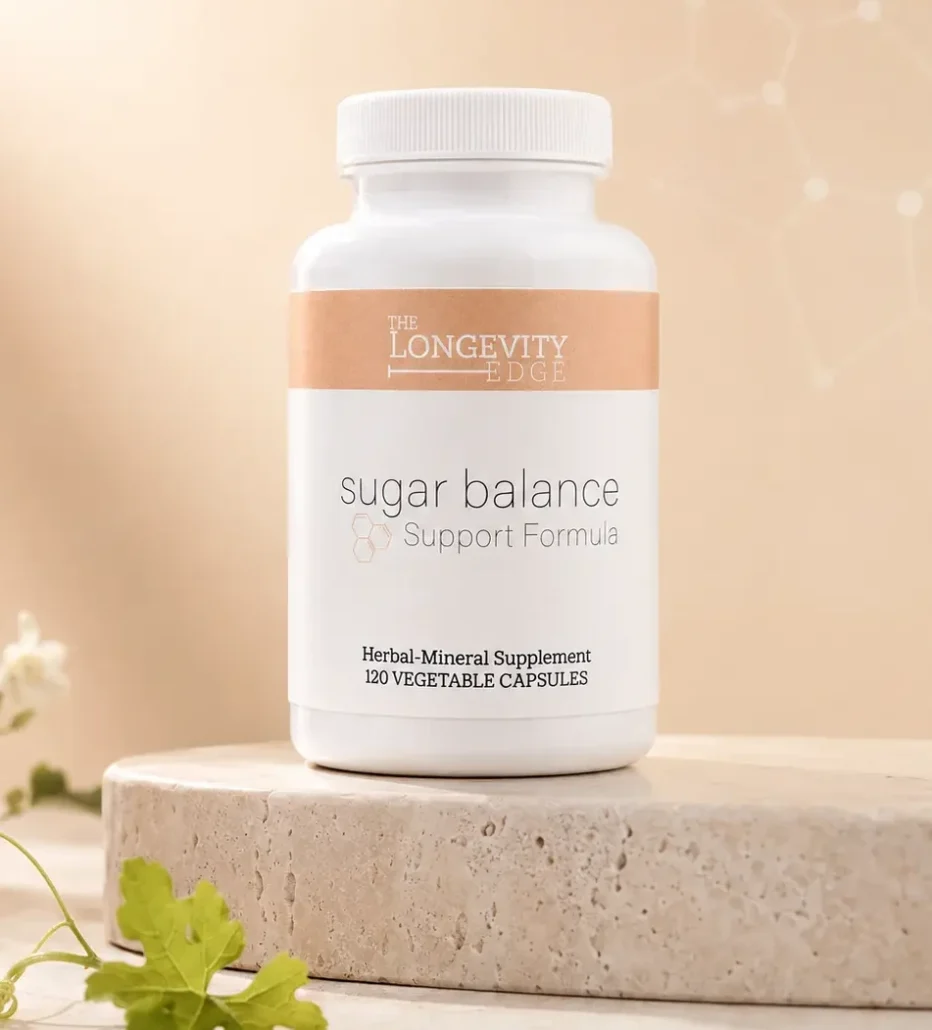
Why the back of this bottle is the whole pitch.
The two words doing the heavy lifting in this category.
Turn over almost any blood sugar support supplement and you will meet the same two words: proprietary blend. They sound rigorous. Here is what they actually do. A proprietary blend lets a manufacturer print an exciting list of ingredients, disclose one total number for the whole mix, and never tell you how much of anything you are getting. The label reads like a formula. Legally, it is a secret.
And yes, one of the bottles in this category is mine. Which is exactly why I want you reading the backs of bottles instead of the fronts, starting with this one.
A recipe is not a secret, so this one is printed.
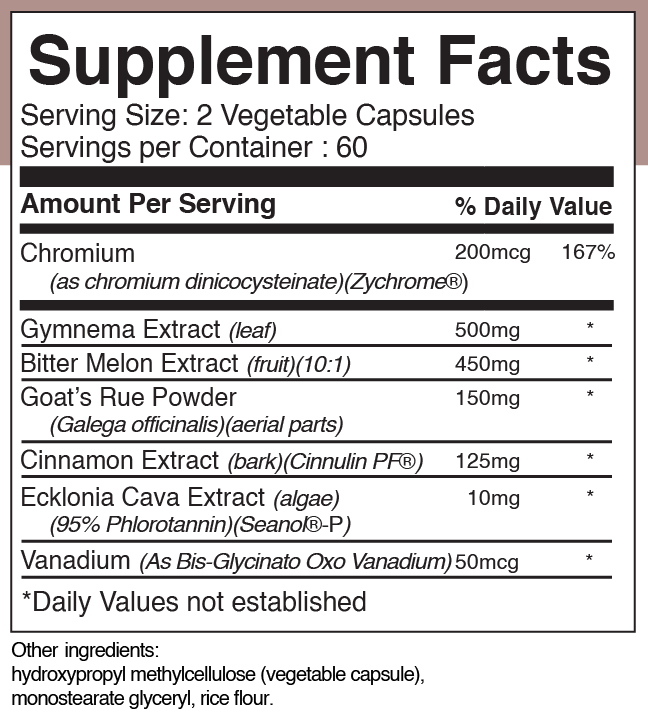
Turn my bottle around and you will find what the category mostly refuses to give you: seven actives, every exact amount, every form named, down to which chromium. No blend. Nothing folded into a total you cannot unpack.
The secret recipe is a fine tradition in fried chicken (eleven herbs and spices, ask no questions). But secrecy is a flavor of marketing, not of medicine, and in something you take twice a day for your health, a recipe you cannot read is a question you cannot ask. I formulated this one to survive the reading.
Start with the chromium, because that is where the money went.
Most formulas on this shelf use chromium picolinate. It is the drugstore default for an understandable reason: it is cheap. This formula uses chromium dinicocysteinate, CDNC, sold as Zychrome®. It costs more to put in a capsule, and it is the form that outperformed generic picolinate when the two were compared head to head in published research.
The amount matters as much as the form. At the directed four capsules a day, you get 400 micrograms of chromium, the same daily amount the CDNC research used. Not a sprinkle of a premium ingredient so the front label can borrow its name. The researched form, at the researched daily amount, printed where you can check it.
The category I did not want to be in
I will tell you plainly that I did not build this because the shelf needed one more bottle. For years I thought most of this category should not exist: big front-label promises, unreadable blends behind them. Building the version I could not find is the sole reason I make an all natural support product for blood sugar at all. It is an every day supplement for me now, the same four capsules I suggest to you, and I hold it to the standard that made me reluctant in the first place.
The rest of the recipe, told straight
Gymnema leaf runs 500 milligrams per serving, 1,000 milligrams across the directed day, an amount squarely in the range oral gymnema research has used. Bitter melon comes in as a concentrated 10:1 fruit extract at 450 milligrams per serving, the category’s oldest workhorse botanical, and one with real cautions I spell out in the FAQs below rather than burying.
Goat’s rue is the interesting one. It is what I call a pre-drug herb: a botanical with centuries of traditional use and a real pedigree, but it was never patentable, so it never got the big trials. I include it, at a disclosed 150 milligrams per serving, because I think tradition of that depth belongs in this formula. You should know that is the honest reason.
And then the fine print I could have hidden and chose not to. Cinnulin PF®, a standardized cinnamon bark extract, at a supporting 125 milligrams per serving. Seanol®-P, an algae extract standardized to 95 percent phlorotannins, at a deliberately small 10 milligrams. Vanadium at 50 micrograms, a trace amount inside the range foods already provide. A proprietary blend exists so nobody can ask about the supporting cast. I would rather you see it, ask, and know this formula’s case never depended on inflating it.
What people actually notice, and when
Let me answer the fair question a longtime customer once put honestly in a review: this category is hard to evaluate subjectively. True. This is not a product you feel the way you feel a sleep aid. It supports blood sugar already within the normal range, and what that steadiness sounds like in my customers’ own words is specific: the post-lunch slump “isn’t as deep.” Afternoons “feel less swingy,” “more even-keeled after meals.” Several describe carb cravings after dinner as quieter and easier to walk away from. Those are their reports, and I pass them along as exactly that.
The timing is consistent too. The people who feel it mostly report weeks two through eight, and more than one says it took until the second bottle. My favorite data point in all 33 reviews is the least flattering one: a customer who says the afternoon slump comes back when she skips a few days. That is what honest evidence looks like in this category, and I would rather hand it to you than promise you fireworks.
How to judge it
Day one, judge the label, because you can: every form, every amount, in your hands, against any bottle on your shelf. Then give the formula honest weeks with your regular meals. If you decide inside 30 days that it is not for you, the money-back guarantee means the decision was free.
Turn the bottle around. Everything I have to say is printed there.
— Dr. Dave