Cellular Science
My Favorite Telomere Scientist
I have had the chance to meet most of the major figures in telomere biology over the last fifteen years. Of all of them, the one whose work I have leaned on most heavily is Maria Blasco, who runs the Spanish National Cancer Centre in Madrid. I want to write a little about why. The...
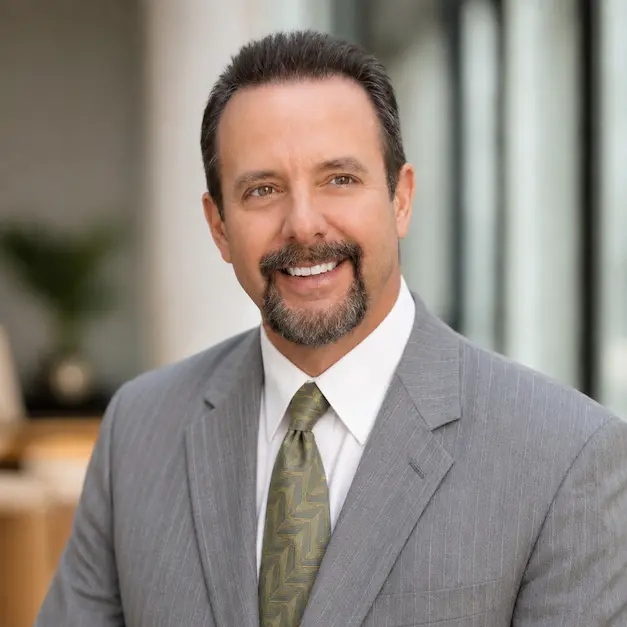
I have had the chance to meet most of the major figures in telomere biology over the last fifteen years. Of all of them, the one whose work I have leaned on most heavily is Maria Blasco, who runs the Spanish National Cancer Centre in Madrid. I want to write a little about why.
The work
Blasco’s group has produced more of the high-quality in vivo telomerase activation data in mammals than any other lab. The AAV9-telomerase work that showed lifespan extension in middle-aged and old mice came out of her group. The work on telomerase in stem cell biology, including the role of telomere maintenance in tissue regeneration, came out of her group. The development of the high-throughput Q-FISH method for measuring telomere length distributions in individual cells, which is the foundation of the only commercially available telomere length test in the U.S., is her method.
Her group has also been the most rigorous on the cancer question. Some of the cleanest evidence that modest telomerase activation in healthy cells does not drive cancerous transformation has come from her lab. That work has been important for moving the field past the original theoretical concerns.
Why I respect her work specifically
What I value most is not the publication record, which speaks for itself. It is the framing. Blasco has been consistently clear that the point of telomere research is to extend healthspan and lifespan in actual people. Not to publish papers. Not to spin out companies. To help humans live longer and better. That is not the dominant framing in most research labs, and it is not the dominant framing in most of the companies that have grown up around her field.
I have spent hours with her in person and on the phone over the years, and she has been generous with her time even when there was nothing in it for her. That is rare enough to be worth saying out loud.
Recent activity
The SHA Wellness Clinic in Spain hosted a seminar on longevity science in 2013, with Blasco, Gloria Sabater, and Vicente Mera. The topics were the usual blend, telomere and telomerase research, rejuvenation, cancer prevention. The audience was a mix of clinicians and informed lay people.
For readers who want the one-paragraph definition. Telomeres are the protective caps on the ends of your chromosomes. They shorten with each cell division. When they get critically short, the cell stops dividing or dies. Your biological age, in cellular terms, is reflected in the percentage of your cells that have critically short telomeres. Chronological age is birthday count. Biological age is cellular reality. The Life Length test, which uses Blasco’s Q-FISH method, is currently the only commercial test that measures both average telomere length and the percentage of critically short telomeres in a single sample.
What you can do about your telomeres
Lifestyle inputs slow telomere attrition. Adequate omega-3 status, sleep, exercise, stress regulation, vitamin D, a real multivitamin, ubiquinol-form CoQ10 in older adults. None of these activate telomerase enough to lengthen telomeres in any meaningful way. They slow the rate at which you lose them.
For meaningful lengthening of critically short telomeres, the data in humans points to TA-65. Blasco’s own work, when she has commented on supplements, has flagged TA-65 as the compound with the actual supporting data for telomerase activation that does not increase cancer risk. The other compounds being marketed under the telomerase activator label do not have comparable data, which is a recurring theme of the field.
The honest summary
Pay attention to the labs that publish and that are public about their findings. Be cautious of supplements that claim telomerase activation without published human data. And, when the telomere story finally moves fully into mainstream clinical practice, remember that the people who did the work to get it there were a small number of careful scientists, of whom Maria Blasco is one of the most important.
— Doc